Wet
- Food scraps
- Peels
- Garden waste
Compost & biogas
Pickup, segregation, recycling and compliance for government, businesses and cities across India, with our main focus on North India.
One pickup. Four streams. Nothing mixed.
Each stream rides its own lane to the right destination.
Thank you. Our team will call you shortly to confirm the details. For anything urgent, call +91 85869 81088.
India’s new rules ask every home and business to separate waste four ways. Here is where each one goes.
Compost & biogas
Recycling
Safe treatment
Hazardous facility
Bulk waste generators must now process wet waste on site or buy EBWGR certificates, register with CPCB and file every year.
Check what applies to youYou are a bulk waste generator if any one of these applies:
Choose who you are to see what the rules expect and how we help.
Large societies are often bulk waste generators and must segregate into four streams and process wet waste on site.
More for housing societiesMixed streams: packaging scrap, process waste, hazardous waste and e-waste, each with its own rule.
More for businesses and factoriesDoor-to-door collection, vehicles, processing plants and Garbage Free City goals under SBM-Urban 2.0.
More for municipal bodiesExtended Producer Responsibility for plastic packaging, electronics, batteries and tyres.
More for brands and producersFrom a single scrap pickup to running a town’s collection fleet.
Form, call or WhatsApp with your PIN code.
Each stream travels apart.
Calibrated scales, slip on WhatsApp.
Compost, biogas, recycling or RDF.
Certificates and monthly reports.
From our head office in Noida we serve government departments, PSUs, institutions and businesses across the country, with most of our work in North India.
Food waste becomes biogas and compost. Dry waste that cannot be recycled becomes fuel for cement kilns.
Industries must raise RDF use from 5% to 15% under the SWM Rules, 2026.
Waste-to-energy solutionsSupply, lease or a fully operated fleet, with partitioned bodies and GPS tracking.
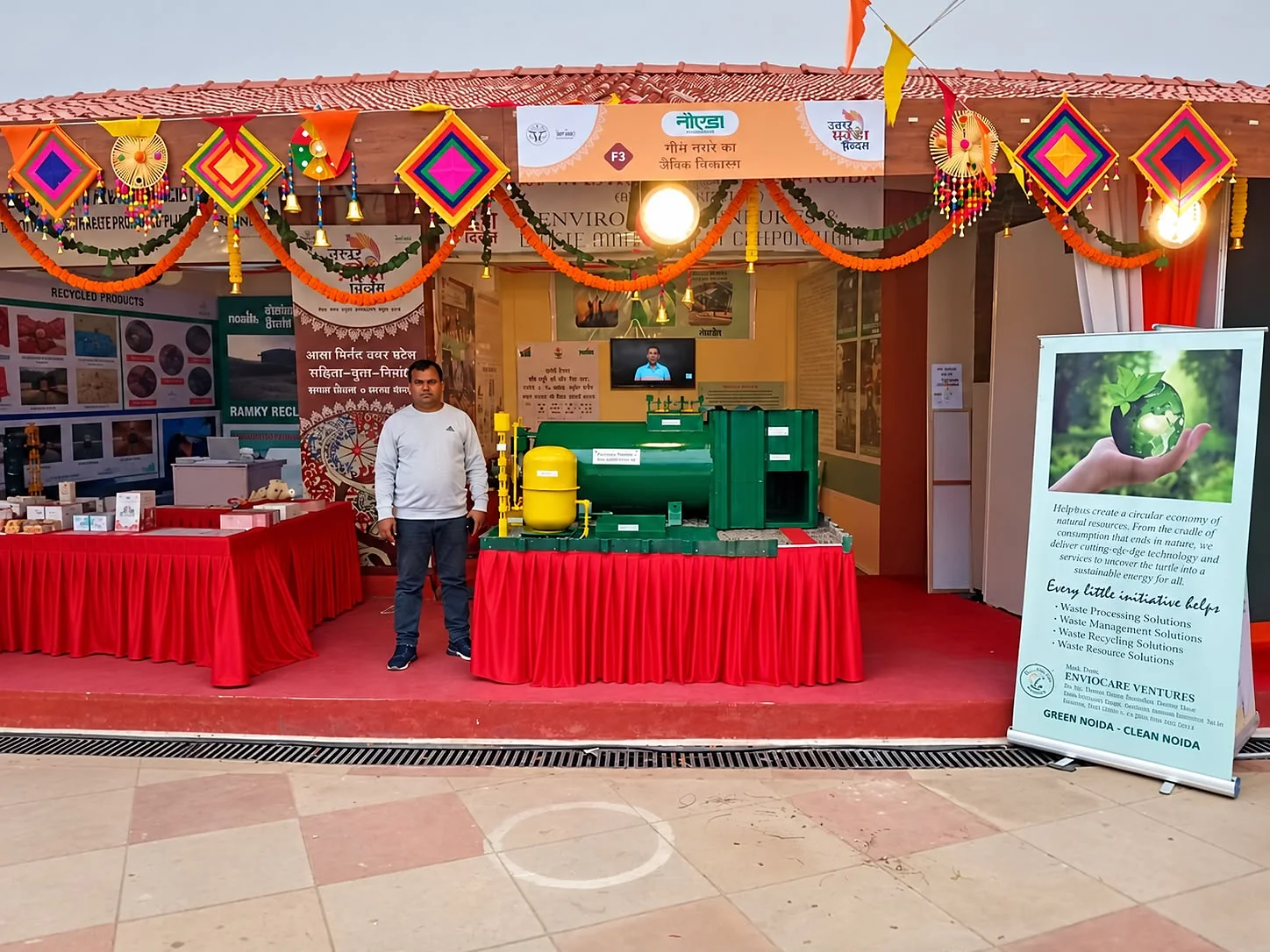
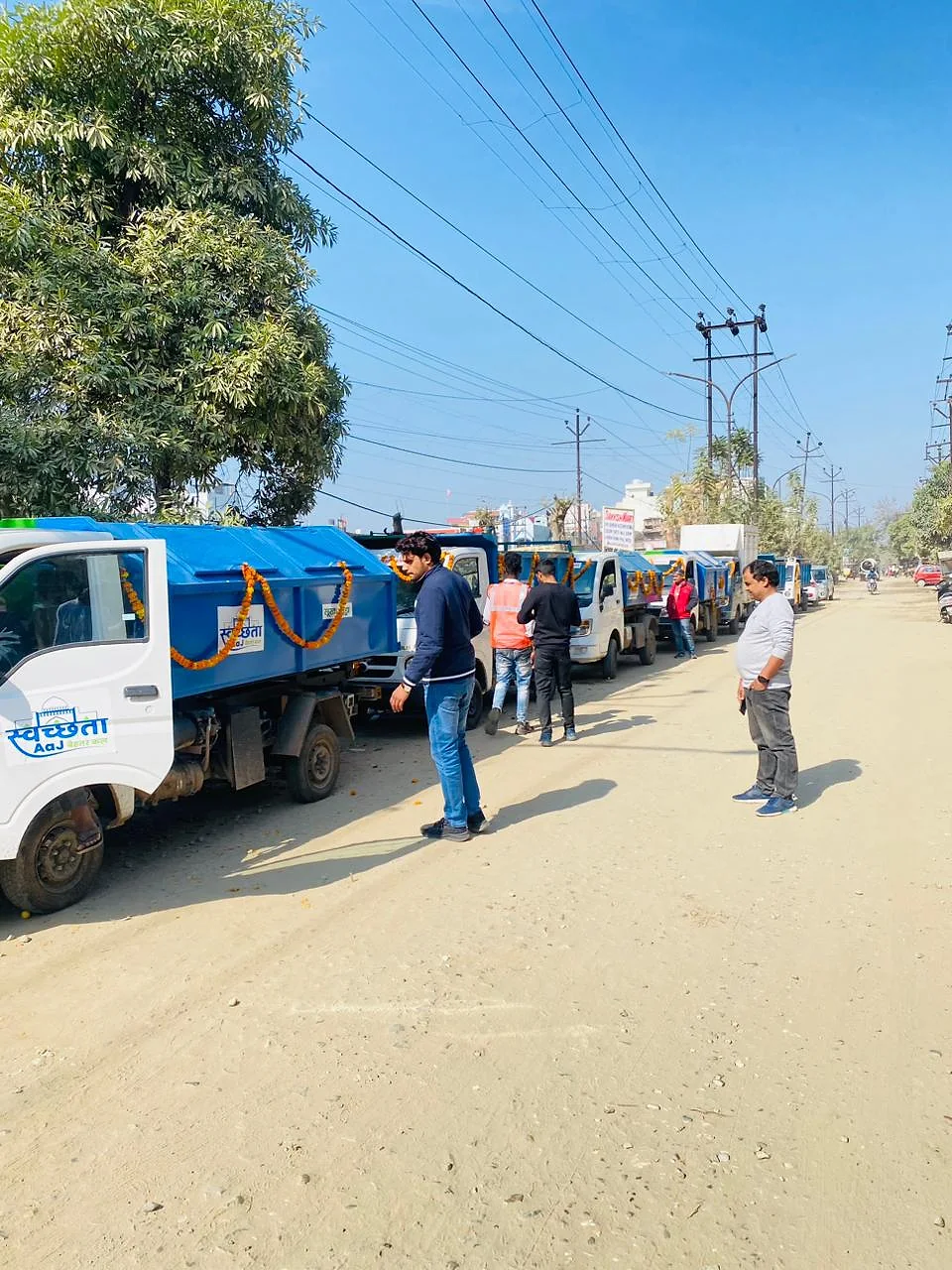
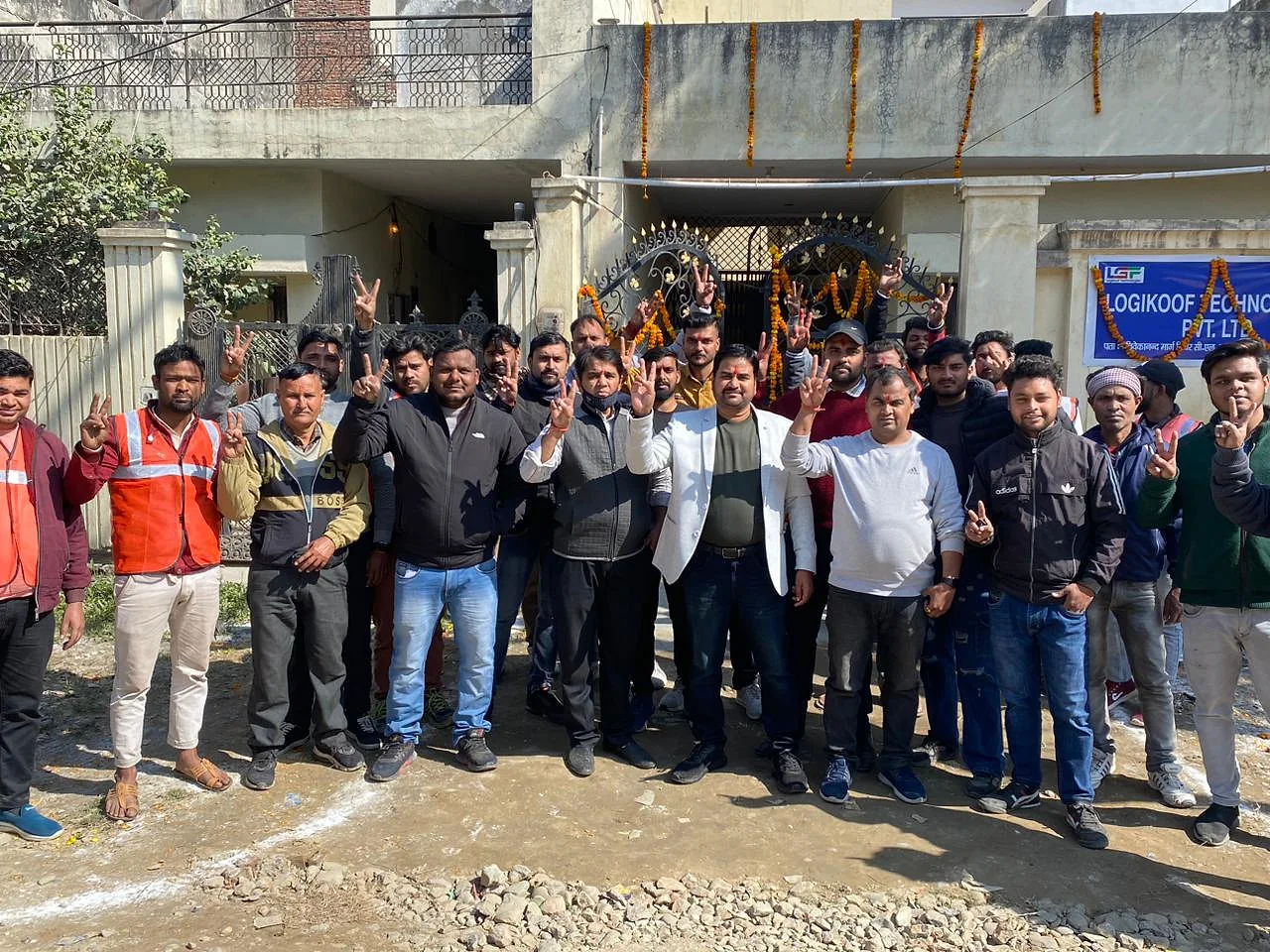
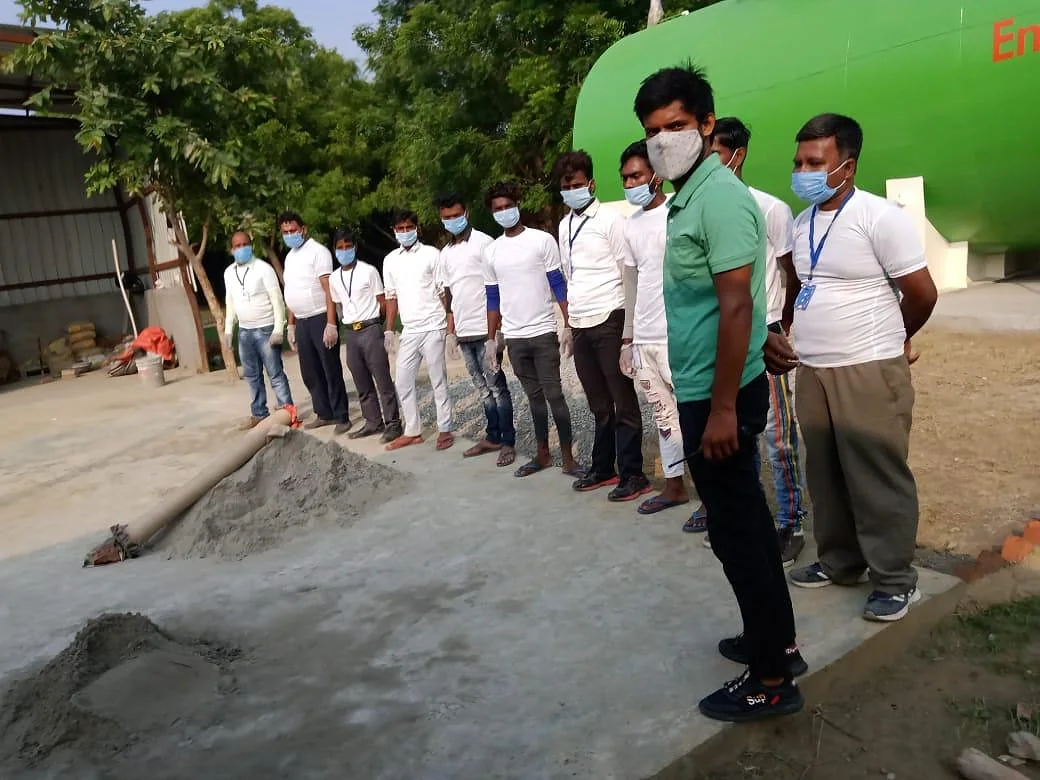
Explore vehiclesLaunch days, exhibitions and work on the ground. The people behind every pickup.
India now processes most of its urban waste. The tonnes left are mixed and unsegregated, and that is the gap we close.
Urban India’s solid waste, every day
Share of urban waste processed
E-waste processed (2023–24)
of 17.51 lakh tonnes generated. That is up 72.54% on 2019–20.
Incorporated in 2025 and led by an operations entrepreneur and a Chartered Accountant. We would rather show how we work than quote numbers we have not earned yet.
Sujeet Kumar & CA Akhilesh Kumar Saha Directors · meet the teamEvery pickup on a calibrated scale; the slip comes to you.
Recyclers and facilities with valid CPCB or UPPCB registration.
Certificates, manifests and monthly reports for any audit.
Structured for government, PSU and institutional work.
Training and pledges completed by our director, Sujeet Kumar, with the World Bank Group, India’s Swachh Bharat Mission and national ministries.
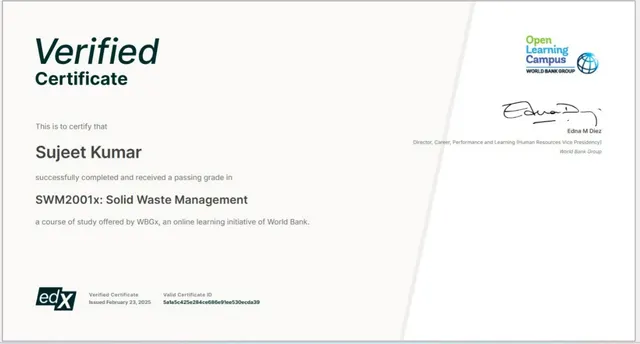 Solid Waste Management (SWM2001x) World Bank Group (WBGx)
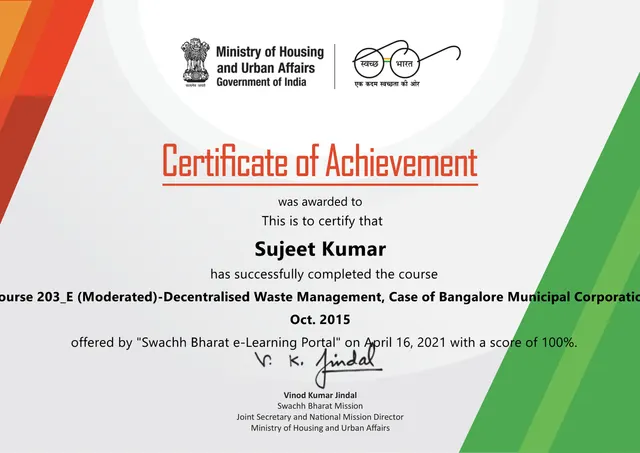 Decentralised waste management Ministry of Housing and Urban Affairs 100%
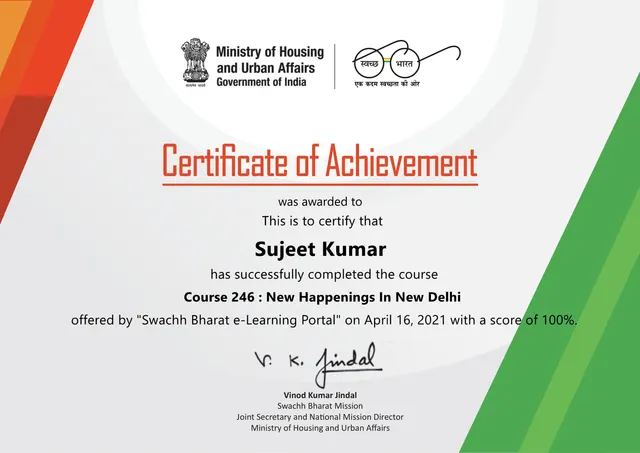 New happenings in New Delhi Ministry of Housing and Urban Affairs 100%
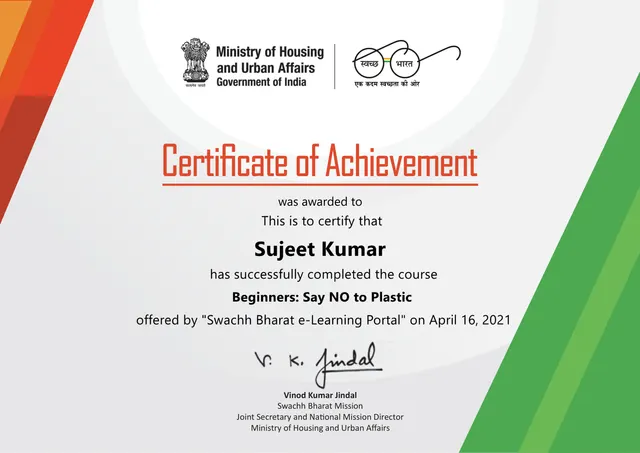 Say no to plastic Ministry of Housing and Urban Affairs
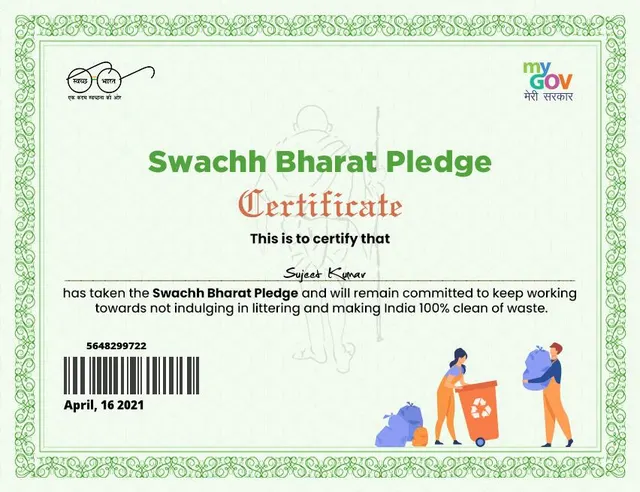 Swachh Bharat Pledge Swachh Bharat Mission and MyGov
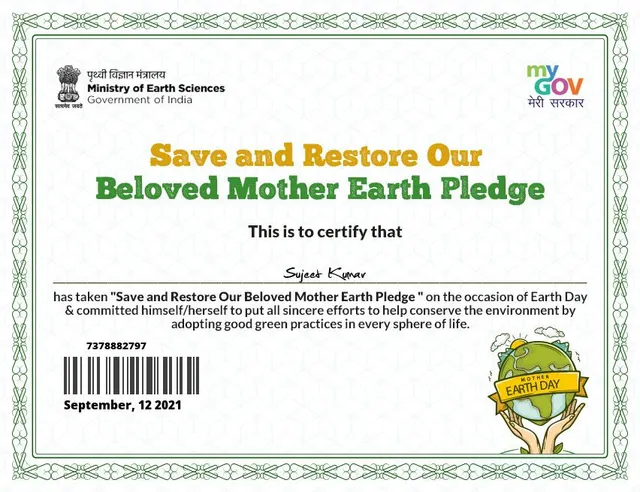 Save and Restore Mother Earth Pledge Ministry of Earth Sciences
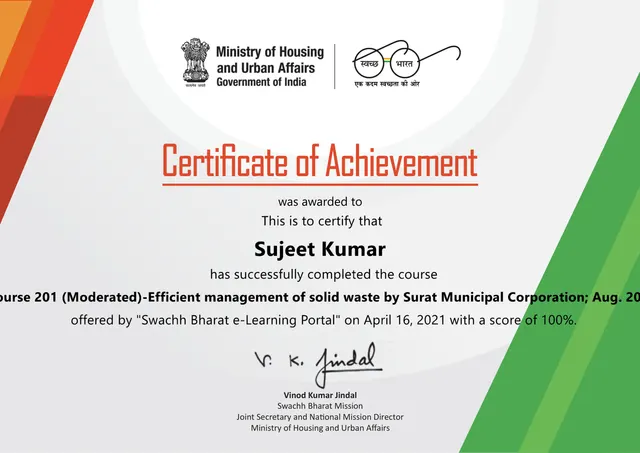 Efficient management of solid waste Ministry of Housing and Urban Affairs 100%
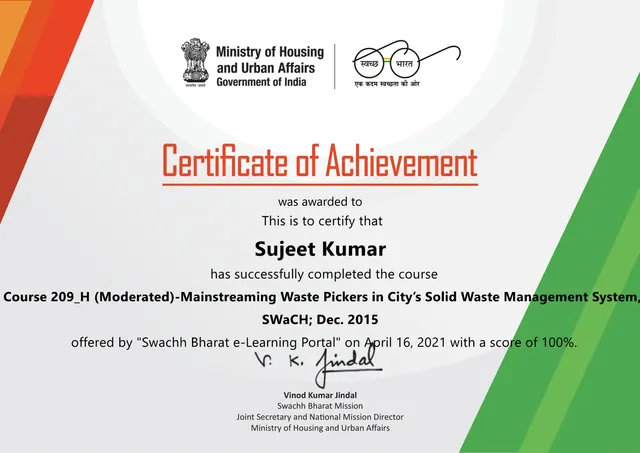 Mainstreaming waste pickers in city waste systems Ministry of Housing and Urban Affairs 100%
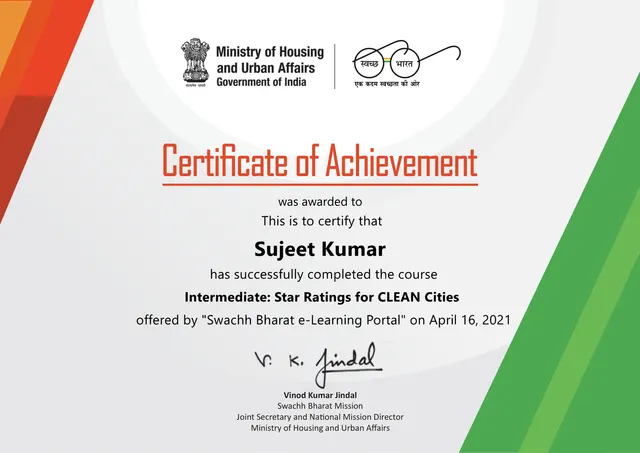 Star ratings for clean cities Ministry of Housing and Urban Affairs
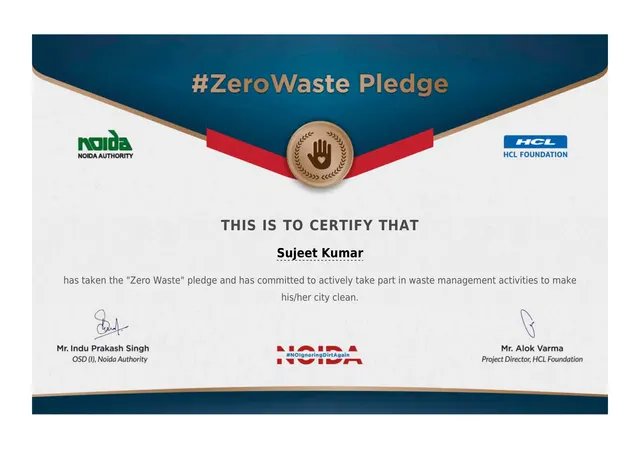 #ZeroWaste Pledge Noida Authority and HCL Foundation
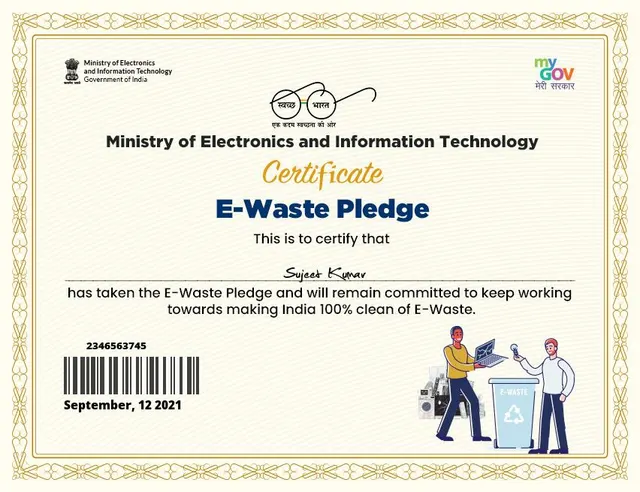 E-Waste Pledge Ministry of Electronics and Information Technology
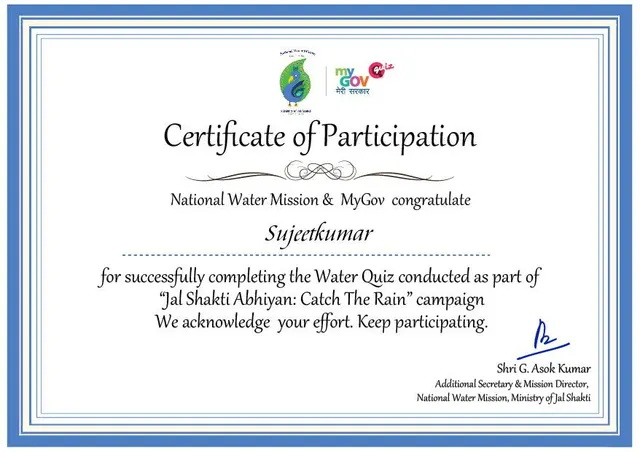 Jal Shakti Abhiyan water quiz National Water Mission, Ministry of Jal Shakti
These certificates were issued to our director, Sujeet Kumar, for courses completed and pledges taken. They record training and commitment; they are not an endorsement of Nexicycle by any government body or institution.
Under the SWM Rules, 2026 you are a bulk waste generator if you have 20,000 square metres or more of built-up area, use 40,000 litres or more of water a day, or generate 100 kg or more of solid waste a day. Bulk waste generators must process wet waste on site or obtain EBWGR certificates, register on the CPCB portal and file an annual return by 30 June.
One-time pickups are priced by quantity and type. Regular service for societies and businesses has a monthly price based on daily quantity, streams, frequency and distance. Recyclable scrap can lower the bill, as it may be bought back. We give a written quote before you start.
Wet waste becomes compost or biogas. Dry recyclables are sorted and sent to registered recyclers. Non-recyclable combustibles can become refuse-derived fuel for cement kilns. Sanitary and special-care waste go to authorised treatment facilities. Only inert residue goes to a scientific landfill.
E-waste must go to a producer’s take-back system or a CPCB-registered recycler or refurbisher. Nexicycle collects e-waste and hands it only to registered recyclers, and can provide recycling and data-destruction certificates.
Extended Producer Responsibility makes producers, importers and brand owners responsible for collecting and recycling the plastic packaging, electronics, batteries or tyres they sell. If your business puts these on the Indian market, you are likely to need registration on the relevant CPCB portal.
Nexicycle Private Limited is a waste management company headquartered in Noida, Uttar Pradesh, serving clients across India with a main focus on North India. We offer waste pickup and segregation, recycling, safe disposal, waste-to-energy, waste collection vehicles and waste and ESG compliance consultancy for homes, housing societies, businesses, industries and municipal bodies.
Tell us what you have and where you are. We will confirm a slot, weigh what we collect and show you where it went.